By Danny Gavin, AEM Communications Coordinator --
Persistent cost pressures, elevated interest rates, and economic uncertainty continue to weigh on the agriculture and construction industries as 2026 draws to a close. While conditions vary significantly by sector, the latest AEM Business Intelligence Equipment Market Update Webinar points to a similar theme on both sides of the non-road equipment industry: 2027 may be more about stabilization than recovery.
AEM Senior Director of Business Intelligence Al Melhim and GlobalData Construction Economist Tom Hopgood recently outlined the major forces shaping agriculture and construction equipment markets heading into the new year.
Their outlook suggests some of the most significant market adjustments are progressing, particularly around inventories. However, the conditions needed to support a broad-based recovery have yet to take hold.
Request information on AEM Business Intelligence products that provide key industry insights, macroeconomic trends, and industry data for a distinct competitive advantage. Learn more.
Construction Growth Remains Uneven
The construction market continues to be defined by significant differences between countries, regions, and sectors.
According to Hopgood, weakness in China is having an outsized impact on the global outlook. The country’s continued property downturn is weighing heavily on residential construction and the broader global forecast.
“If we were to exclude the largest market from global output, there actually would be 1.4% growth in 2026,” Hopgood said.
North America is similarly developing into what Hopgood described as a “K-shaped” market, with some sectors performing much better than others. Data centers, power infrastructure, rail, and portions of public infrastructure continue to provide opportunities, while areas such as office, manufacturing, and residential construction face greater pressure. Data centers remain one of the most notable areas of opportunity.
But strong investment does not guarantee every announced project will ultimately be built. Hopgood pointed to a growing divergence between data center projects already under construction and those still in pre-construction.
“Projects that have reached execution are progressing quite well,” Hopgood said. Those still in pre-execution, however, are facing more challenges moving forward.
Those constraints build on issues identified earlier in 2026, including the availability of land, permits, power, and critical equipment, as well as growing local resistance to data center development.
For non-road equipment manufacturers, the result is a construction market with considerable opportunity, but one where demand is likely to remain highly dependent on project type and timing.
“If I were to summarize 2027 in one sentence, expect stabilization before recovery, replacement before we even see any expansion.” -- Al Melhim
Costs, Labor and Financing Remain Construction Headwinds
Contractors also continue to contend with higher material and energy costs, skilled-labor shortages, and expensive financing.
Construction employment has grown, but productivity has not kept pace. According to Hopgood, output per worker is down compared with 2020 in both the U.S. and Canada. That creates opportunities for technologies and construction methods that can help contractors do more with their existing workforces, including automation, artificial intelligence, building information modeling and prefabrication.
Higher borrowing costs add another layer of pressure, particularly for rate-sensitive residential and commercial projects. They can also increase the cost of financing equipment fleets.
“There could be a scenario where customers may favor rental over buying and delay replacement purchases until these rates go back down again,” Hopgood said.
Public infrastructure will also be important to watch. Money already committed under the Infrastructure Investment and Jobs Act (IIJA) should continue supporting project activity into 2027, but uncertainty around future infrastructure funding could affect equipment demand beyond that.
Agriculture Continues to Search for a Bottom
Agriculture faces a different set of challenges, but AEM's outlook points to a similarly gradual path forward.
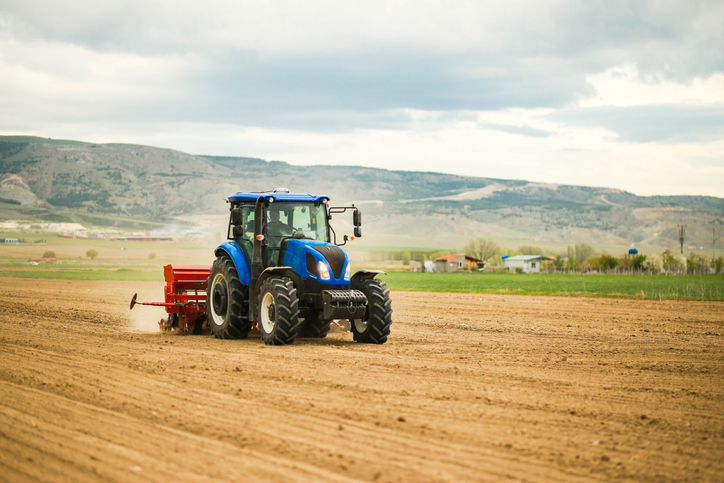
Tractor and combine sales remain under significant pressure. According to AEM data, year-to-date sales through September were at their lowest level in roughly 15 years.
“This past five-year period has become the longest sustained downturn we’ve seen in nearly three decades,” Melhim said.
At the center of that weakness are challenging farm economics. Producers are facing pressure from both sides of the margin equation, with input costs remaining elevated as many commodity prices remain weak.
“In previous cycles, input costs and crop prices generally moved in the same direction, which allowed stronger crop prices to offset rising costs or, in some cases, lower costs to cushion weaker revenues,” Melhim said. “This time around, this relationship has broken down.”
Liquidity and financing conditions are adding to the pressure. As farmers devote more cash to operating expenses and existing debt obligations, there is less capacity to finance large equipment purchases.
Two Different Stories Are Emerging in Ag Equipment
The downturn is not affecting every segment of the ag equipment market equally. Smaller tractors have been comparatively resilient. Under-40-horsepower tractors benefit from a more diverse customer base beyond production agriculture, while the 40-to-100-horsepower segment receives some support from relatively stronger livestock economics.
Large equipment presents a more difficult picture. High-horsepower tractors, four-wheel-drive tractors, and combines are more closely tied to grain and oilseed producers, where challenging margins continue to make major capital investments difficult.
“We have the small horsepower versus the high horsepower story here,” Melhim said. “Smaller tractors are holding up relatively better.”
There has also been progress on inventories. Manufacturers have adjusted production to the weaker demand environment, and inventory levels in several equipment categories are moving closer to historical norms. Some large-equipment categories, however, will require continued production discipline in 2027.
Have a unique and valuable perspective to share on a trend, opportunity, or challenge impacting non-road equipment manufacturing? Want to help shape present and future conversations between AEM members and their industry peers? Join AEM’s newly formed Industry Experts Panel today and help drive the future growth and development of AEM research, market intelligence, and other AEM products and offerings.
Replacement May Come Before Expansion
One of the most important factors shaping the next equipment cycle will be replacement demand.
Melhim expects replacement needs to begin supporting smaller tractors first, while some large-equipment categories appear to be several years away from a more meaningful replacement-driven upturn.
“The next up cycle will likely be driven by replacement and not expansion,” Melhim said.
For manufacturers and suppliers, that distinction could make fleet age, inventory levels, new orders, and used-equipment activity particularly important indicators of where demand is headed.
Used equipment may be particularly important. As buyers postpone new purchases, demand is increasingly shifting toward used machines, which could also create opportunities for parts, maintenance, repairs, and equipment upgrades.
Stability Is the First Step
Neither agriculture nor construction enters 2027 without significant challenges. High costs, expensive financing and continued uncertainty are constraining investment, while both industries are becoming increasingly divided between stronger and weaker market segments.
There are nevertheless reasons to look beyond the headline numbers.
Construction continues to benefit from investment in areas such as data centers, power and infrastructure. Agriculture equipment manufacturers have made progress bringing supply closer to demand, while future replacement needs should eventually provide additional support.
For now, however, the outlook calls for patience.
“If I were to summarize 2027 in one sentence, expect stabilization before recovery, replacement before we even see any expansion,” Melhim said.
For equipment manufacturers navigating another uncertain year, stabilization may not represent a full recovery. But after an extended period of market adjustment, it could represent an important first step.