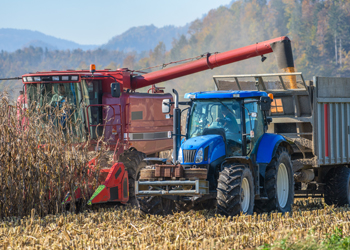
AEM is proud to recognize Sept. 16-22 as National Farm Safety and Health Week, and the association works diligently with its members to address safety issues relevant to the manufacturing of agriculture equipment.
AEM strongly encourages end users of ag equipment to receive the proper safety training prior to operating equipment, so as to reduce the risk of occupational injury. Some best practices AEM members should share with equipment operators are as follows:
- Follow a safety program. This should include avoidance of alcohol and drugs when operating machinery.
- Read and follow all instructions in the manufacturer's operator and safety manuals.
- Be familiar with your equipment’s controls, how it operates, its load capacity and its masked visibility areas. Know how to operate all the implements and attachments used with it.
- Know the inherent hazards related to moving parts (such as PTOs).
- Perform routine inspections of the equipment to ensure it is in good working order. If potential hazards are discovered, use lock-out/tag-out procedures to remove the machine from operation until repairs are made.
- Train employees and family members to assess safety hazards, discuss potential accident situations and outline emergency procedures.
- Be sure the equipment has approved rollover protective structures (ROPS).
- Always fasten seat belts, if so equipped, while operating the machine.
- Make sure all safety guards are put back on the equipment after maintenance to protect against moving parts.
- Pay attention to all safety signage and labels on the machine. Be sure to know what their color coding means and the hazards they communicate.
- Wear the proper personal protective equipment (PPE). This may include: boots, gloves, goggles, face shields, respirators, earplugs and high-visibility clothing.
- Avoid wearing loose clothing that could catch on moving parts.
- Avoid slopes too steep for safe operation.
- Always be aware of bystanders and their proximity to the equipment. Never allow someone to ride in or on the equipment unless specifically equipped to provide a safe location for them, such as a training seat.
- Always travel at a safe rate of speed. Take into account any implements or attachments that may affect braking distance.
AEM Safety Materials Program
AEM member committees have produced a number of safety materials designed to promote the safe operation of ag equipment. Titles include:
- Ag Tractor Safety Manual
- Ag Sprayer Safety Manual
- Lighting and Marking of Ag Equipment on Highways
- Industrial Ag Mower safety manual (English and Spanish)
- Skid Steer Safety Manual (English and Spanish)
- Ultra Low Sulfur Diesel Fuel Bulletin
- Rough Terrain Forklift Safety Manual
To learn more about AEM’s safety materials program, contact Jaime Vos (jvos@aem.org, 414-298-4135). For more information about AEM’s efforts to promote the safe use of ag equipment, contact Mike Pankonin (mpankonin@aem.org, tel: 414-298-4128).
Subscribe to the AEM Industry Advisor for more AEM news and updates.