By Danny Gavin, AEM Communications Coordinator --
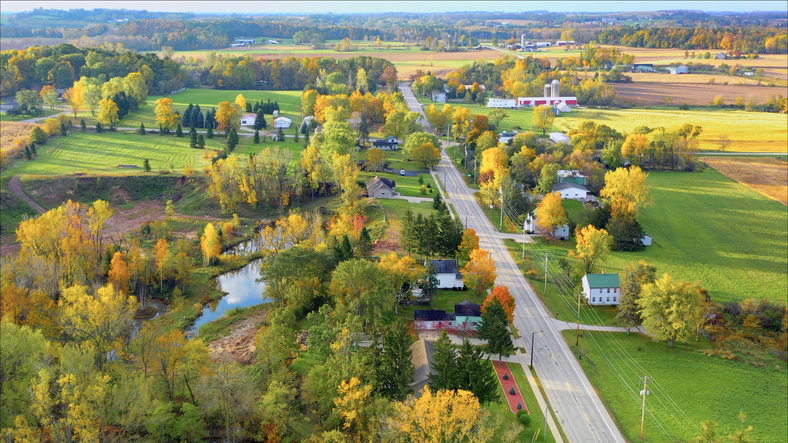
As U.S. manufacturers evaluate where to expand, many overlook rural areas in favor of major metropolitan areas due to widespread misconceptions. But rural America is experiencing a quiet but meaningful resurgence – one that corporate leaders cannot afford to overlook.
As companies navigate evolving economic conditions, many are reevaluating long-held assumptions about where sustainable growth can occur.
“For generations, people have heard that rural America is dying, but when you actually step into these communities, they’re full of life, resilience, and young people choosing them for the very reasons others overlook,” said Justin Erickson, vice president of site selection and economic development at AEM member company The Brookshire Company.
Join AEM member company executives and the next generation of industry leaders at the 2026 AEM Annual Conference, set for Nov. 10-12, 2026, at the JW Marriott Tucson Starr Pass Resort & Spa in Tucson, Arizona. To learn more, visit aem.org/annual.
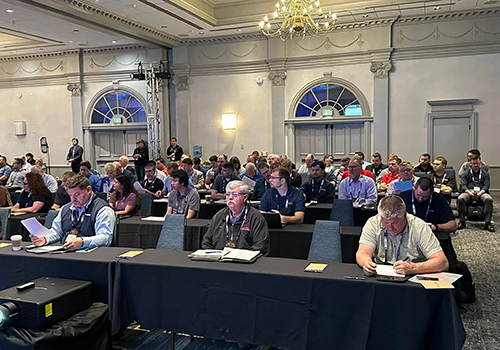
Erickson joined his colleague, Corey Hepola, vice president of communications, growth & strategy at The Brookshire Company, to explore opportunities in rural America at the 2025 AEM Annual Conference this past November.
“We’re excited to talk about the theme Annual Conference, The Art of Balance – balancing the options as a manufacturing company and understanding the benefits of both rural and metro areas,” said Hepola.
A Shifting Environment
“To understand what’s happening right now in rural America, and how things have changed over time, we need to wind the clock back about 80 years,” said Erickson.
In the wake of World War II, industrial development companies purchased rural land, major manufacturers flocked to these areas, and individuals jumped at the opportunity to secure stable employment.
The 1970s brought forth conversations about early automation, and manufacturers started to relocate administrative and technical roles to metro areas. The 1980s then saw significant drops in global logistics costs, and many companies turned their focus away from U.S. manufacturing. The 1990s accelerated globalization and the expansion of international consumer markets.
Rural regions bore the brunt of these changes, losing millions of manufacturing jobs. By 2010, rural America was widely perceived as stagnant.
Rural America Is Rebounding
Over the past 15 years, several factors have allowed rural America, and the manufacturing industry as a whole, to gain new momentum. Modern manufacturing now requires fewer (but more skilled) workers, making smaller labor markets more viable. Companies also place increasing value on stable operations and lower-cost footprints, which rural areas offer.
In 2020, the COVID-19 pandemic exposed the vulnerability of global supply chains. Manufacturers are now working to build supply chain resilience through reshoring and domestic investment.
“We’ve heard clients express that COVID-19 caused them to consider other potential disruptions to their business in the future, like geopolitical situations,” said Erickson. “As a result, companies are now starting to think creatively about doing more of their business in the U.S.,” said Erickson.
And, Millennials and Gen Z are moving to rural areas at higher rates than ever before, as they place more importance on quality of life and affordability than generations before them. In fact, the population in nonmetro areas has increased each year since 2020.
A 15% drop in college enrollment over the past decade has also opened talent pathways back into skilled trades and modern manufacturing roles. Young people across the country are reevaluating taking on debt to attend a four-year college, and they’re rediscovering the value of skilled trades.
“Currently, we’re seeing a little bit of a comeback in rural areas,” said Erickson. “It's not a full pendulum swing, but things are changing gradually.”
Why Rural Isn’t Currently in the Running
Despite this progress, rural locations rarely appear on short lists as companies consider expansion. There are several reasons:
- Contractors and developers crave site control, and they gravitate toward projects near their existing resources to save on time and travel, usually prioritizing locations near metro markets.
- Commercial brokers are largely incentivized by faster, higher-value transactions.
- Site selection consultants often reduce geographic scope quickly and rarely have lived experience in rural settings.
- Economic development organizations are metro-focused entities, with rural teams lacking the budget to attend major industry events.
- Media, pop culture, and political narratives continue to perpetuate outdated stereotypes about rural decline.
“More than 95% of U.S. landmass is categorized as rural – that’s more than 60 million people and a good portion of the country that is largely overlooked when companies look for the next location to expand their operations,” said Erickson.
What’s Missing for Manufacturers?
First and foremost, companies often dismiss rural talent pools without understanding how far rural Americans are willing to travel for work (labor shed). These employees are more willing to commute long distances for stable employment, typically around 30-60 miles. And, when looking at supply and demand, there is often less competition for skilled labor in rural America.
Additionally, companies are often unaware of the financial incentives available in rural areas. Metro projects generally rely on familiar tools such as tax increment financing structures and state-level credits or grants. Rural areas unlock an entirely different set of financing options, such as USDA loans, new market tax credits, and forgivable loan structures.
Rural communities often view manufacturing as the backbone of their economy, rather than a relic of the past. They champion industry investment, celebrate workforce opportunities, and are grateful to companies who invest in their communities.
In contrast, many metro areas are increasingly oriented toward the service industry, technology, or AI-driven economies (which create uncertainty for manufacturers).
Rewriting the Story
To unlock rural potential, the manufacturing industry must continue to work to change public perception. Through its “My Town” documentary series, The Brookshire Company does just that, telling the stories of real rural communities, showcasing manufacturers and their employees who are building world-class operations.
“Our mission is to break down the popular misconceptions about the rural lifestyle and show why talented people and growing companies choose to live in these communities,” said Hepola.
Rural communities are not only viable, but they’re also competitive and increasingly essential to America’s manufacturing future.
Evaluating Hidden Rural Opportunities
When planning expansions, workforce diversification, or supply chain resilience strategies, Erickson and Hepola recommend that leaders:
- Include rural markets in early location analysis
- Evaluate true labor shed capacity (distance employees are willing to travel), not just population counts
- Explore the rural financial incentives and financing tools
- Consider long-term operational costs and community alignment
- Look beyond perceptions to real data
“To be clear, we’re not suggesting that companies just up and move to rural areas,” said Erickson. “We’re saying if you want to find people that want manufacturing to thrive, and who are encouraging manufacturing careers for the next generation, you may want to look into rural opportunities.”
Corporate leaders are tasked with anticipating where the wind will blow – not just in the next quarter, but five, 10, or 20 years from now.
Rural America isn’t dying. It’s quietly evolving, and it offers compelling advantages to modern manufacturers. The only question now is which companies will recognize the hidden growth opportunity in rural America first.