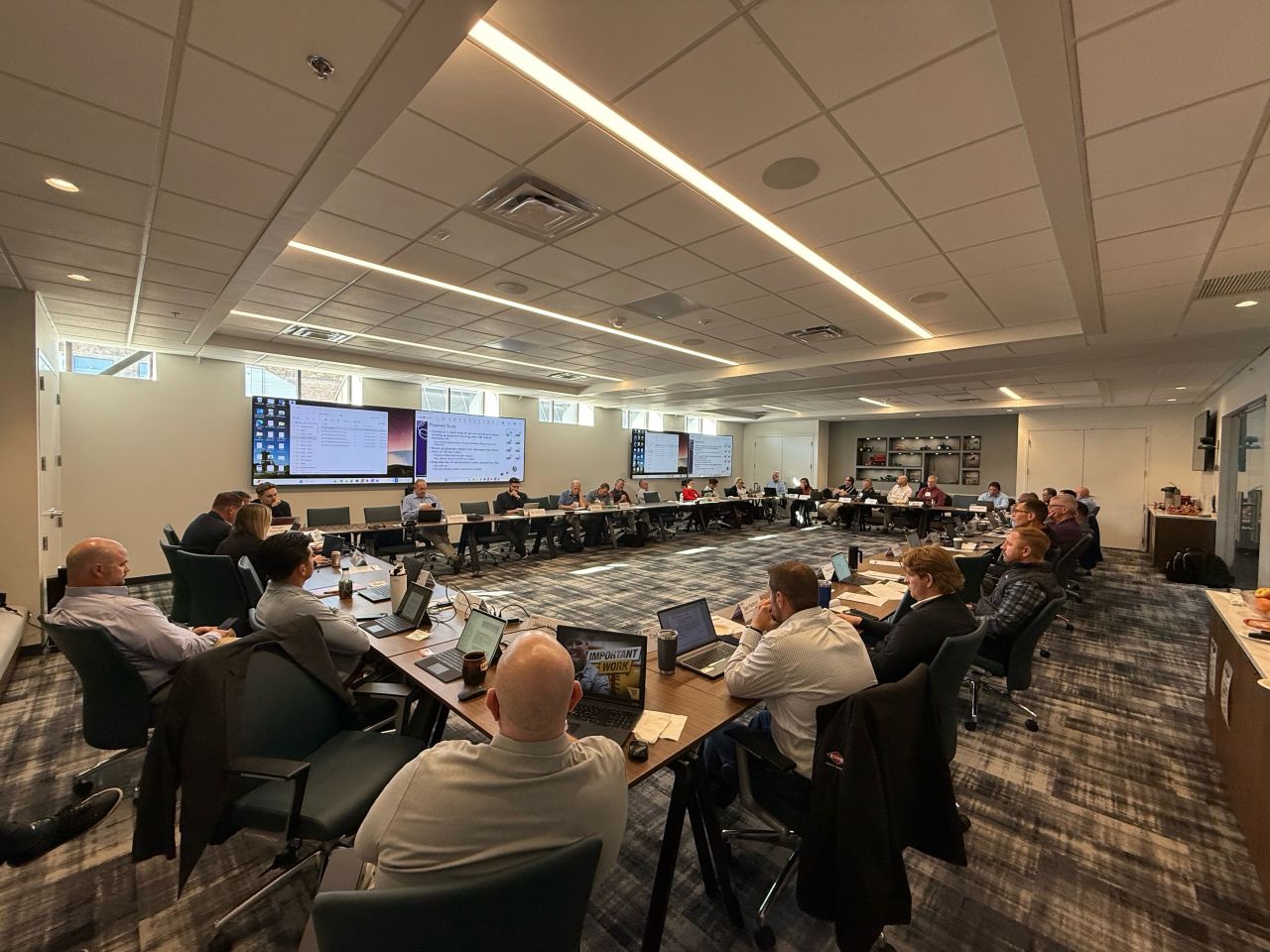
A new industry standard, ISO/TS 15143-4, is poised to streamline how construction project data moves from the office to the jobsite, addressing long-standing challenges around interoperability, efficiency, and collaboration.
Known as “Part 4: Worksite topographical data” of the ISO 15143 series of standards, the framework represents a significant step forward in aligning technology across equipment, contractors, and project partners, all while laying the groundwork for future innovation.
At its core, Part 4 is designed to enable primary workflow efficiency by supporting seamless data flow from office-based teams to field operations, even if the solutions are from different providers. The current iteration of the standard focuses on transferring critical design and project information—such as design files and site calibration details — to machines on the jobsite. By improving the speed and reliability of this office-to-field exchange, the standard helps ensure crews have accurate, up-to-date information when and where they need it.
“This initiative is an investment in the people who power construction – from the jobsite to the back office,” said says Scott Crozier, vice president, civil construction field systems, Trimble. “For operators, true interoperability means eliminating the friction between the design and the dirt, ensuring mixed fleets operate as a single, cohesive system to deliver smoother workflows using the same designs, RTK correction streams and site calibration no matter the machine or technology brand. By aligning around shared data standards, we’re setting the foundation for seamless connectivity and more agile, technology-enabled construction for years to come.”
Said Rune Lodall, director of product Management, machine control division, Leica Geosystems, part of Hexagon: “Since 2017, this has been a long and rewarding journey for Leica Geosystems, working alongside Trimble, Topcon, and 21 organizations across the industry to define a brand-independent data standard for construction technology and machinery. Through years of workshops, working groups, challenges, and even a global pandemic, 61 experts around the world contributed countless hours to turn a shared vision into a 260-page international standard. Together, we have created a foundation that connects machines and site systems regardless of brand, giving customers greater flexibility, improved efficiency, and confidence in their digital workflows.”
A key feature of Part 4 is its ability to deliver interoperability across mixed technology fleets. Contractors often rely on a combination of owned and rented equipment, and in many cases do not have control over the technology vendors embedded in rental machines. This standard addresses this reality by ensuring that project data can flow seamlessly to all equipment, regardless of make, model, or technology provider. This flexibility removes barriers when contractors need to scale up equipment on short notice, helping keep projects on schedule. Contractors often rely on a combination of owned and rented equipment, and in many cases do not have control over the technology embedded in the machines.
Beyond equipment, the intent is to also foster broader industry collaboration. The standard allows general contractors and their partners to share data freely, even when relying on different technology ecosystems. By removing technological hurdles, Part 4 supports more efficient coordination across project teams and encourages collaboration without forcing contractors to standardize on a single vendor.
“This standard is the result of tremendous collaboration across many industry stakeholders, who were all motivated by a desire to improve efficiencies for our industry. Compliant solutions can provide so many benefits, such as contractors getting more utilization from their assets, rental companies seeing more utilization in the technologies they invest in, dealers able to more easily plan their inventories, and companies finding it easier to quote more jobs as sub-contractors and joint venture partners who might have different tech ecosystems,” said Nick Bollweg, manager of emerging solutions, John Deere, and convenor of the ISO Working Group that developed the standard, noting how open data exchange can improve coordination and reduce inefficiencies across complex projects.
Added Kristin Gaskill, director of business development, Caterpillar Inc.: “This industry initiative is a customer‑focused effort aimed at addressing back‑office challenges that can slow progress on the jobsite. By removing friction from a customer’s workflow, we help accelerate technology adoption and utilization—unlocking proven gains in productivity and safety across the industry. When we clearly understand the challenges, it’s exciting to see the industry come together to create standards that deliver meaningful value quickly.”
While the initial emphasis is on delivering data to the field, future releases in this series of standards are expected to expand interoperability in the opposite direction, enabling field-to-office data flows, such as “as-built information” to further enhance project visibility and decision-making.
The standard is also intended to spearhead industry innovation and growth. By lowering barriers to technology adoption, it aims to help a larger portion of the construction community embrace digital tools, regardless of the equipment or technology platforms they have historically used.
Topcon's Head of Construction Platform, Fredrik Eklind, noted: “The introduction of ISO 15143-4 is more than just a technical milestone; it supports the desired shift in the way the industry approaches its operations, by enabling a mixed fleet jobsite where machines and systems seamlessly share information and pave the way for smarter, more integrated projects. This standard has come about through a highly successful collaboration, which has been rewarding for all involved. The result is a new level of collaboration that fosters innovation and pushes the boundaries of what is possible in site management and machine control.”
As an ISO standard originating from an industry working group consisting of more than a dozen technology providers and OEMs, Part 4 ultimately establishes a common platform that advances safety, quality, and trust. This shared foundation is expected to provide greater assurance to regulators and stakeholders regarding the accuracy and reliability of data, with participants anticipated to be releasing ISO compliant solutions by the end of 2026.
“Together, these elements position a unifying force for the construction industry, one that not only improves today’s workflows, but also sets the stage for a more connected, efficient, and innovative future,” added John Somers, vice president, construction & utility Association of Equipment Manufacturers (AEM).
Members of the ISO Working Group that worked on Part 4 include:
- Arkance Systems
- Carlson
- Caterpillar
- Earthbrain
- Hitachi
- Infrakit
- John Deere
- Komatsu
- Leica Geosystems
- Novatron
- Topcon
- Trimble
- And more