By Danny Gavin, Communications Coordinator, Association of Equipment Manufacturers --
Attracting talent is only half of today’s workforce equation. Retention and sustained employee engagement have become equally pressing concerns for manufacturers, particularly as younger workers enter the labor force with different expectations, priorities, and motivations than previous generations.
Understanding what motivates these young employees is essential to building a sustainable workforce strategy. Companies may be surprised to hear that many young people would rather work for an employer with strong values than an employer who offers rapid growth opportunities, setting them apart from those who came before them.
“We focus on authenticity in our recruitment strategy by empowering employees to share their stories online and showcasing our core values: people, safety, innovation, and excellence,” said Thomas Haun of Turner Mining Group, a full-service mining industry provider. “We’ve received a shocking amount of engagement from our efforts – many current employees are excited to participate, and we’ve seen an increase in applications from young candidates.”
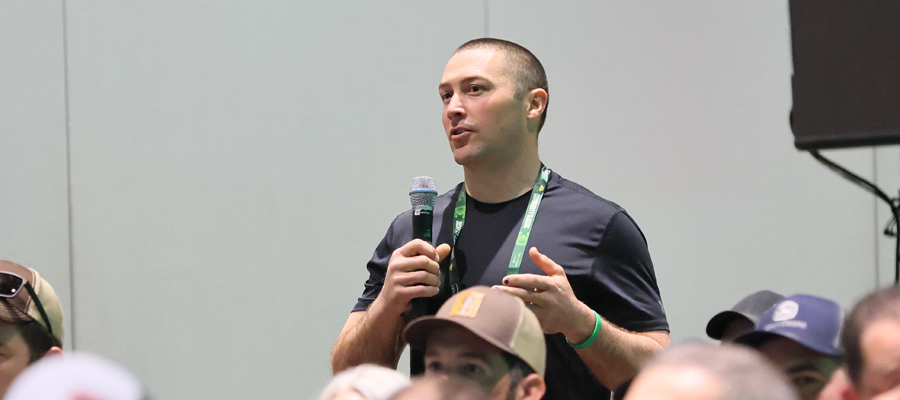
Haun presented at CONEXPO-CON/AGG 2026 on the importance of understanding the next generation of employees, and how to attract and retain this key group.
These insights were shared during an education session held last month at CONEXPO-CON/AGG 2026. Sign up today to purchase on-demand education access.
Promotions Aren’t Always the Primary Motivator
For decades, career advancement has anchored employee retention strategies. However, for today’s younger workforce, promotions alone are no longer enough to sustain long-term commitment. Workers from ages 25 to 34 now make up a sizable share of the labor force, approximately 45 million individuals nationwide, yet only 6% cite promotion as their top career priority.
Nearly 80% of younger employees prioritize factors such as work‑life balance, alignment with company values, and transparent communication. Without clearly defined values and the ability to demonstrate them authentically, employers risk falling short in addressing ongoing workforce challenges.
Recruiting in a Digital-First World
On average, adults ages 25 to 34 spend 4.6 hours per day on their phones—a reality that creates meaningful opportunities for employers willing to embrace digital communication and social platforms as part of their recruiting and employer‑branding strategies.
Today’s job seekers aren’t passively scrolling job boards. Roughly 70% of younger candidates intentionally filter which employers they will consider, and many refuse to engage with organizations they haven’t researched first. In this environment, a strong digital footprint is no longer optional, and companies lacking one may find themselves invisible to top talent.
One of the most authentic ways to shape employer perception is through employees themselves, Haun explained. When workers share their own experiences on social media, they offer prospective candidates a transparent view of what it’s like to work within an organization. This employee‑driven content strengthens brand visibility and credibility – key factors when job seekers research potential employers online.
“The only thing that makes a company unique is the people who work there,” said Haun. “They’re the ones that companies can showcase if they want to exemplify their values and their priorities, as well as show that they’re a great place to work.”
Equally important is how organizations recognize and reward the behaviors they want to encourage. Recognition programs that are clearly tied to company values help reinforce what matters most, while signaling to employees that those values are actively upheld, not merely stated. When employees feel recognized for how they contribute, engagement often increases.
A wealth of strategies exists to help attract and retain the workforce of tomorrow, and AEM is here to help bring them to light through its Workforce Development Committee.
Retention Starts with Listening
Retention strategies are most effective when they are proactive, not reactive. Employee turnover carries genuine cost and disruption, yet many issues can be addressed early. By prioritizing consistent feedback through surveys, individual conversations, and other listening mechanisms, companies can identify challenges before they lead to disengagement and departure.
Employee retention improves when individuals believe their perspectives matter, and that leadership is prepared to respond. For employers thinking long term, the implication is clear: while competitive wages help attract younger workers, sustained engagement, and retention demand far more than promotion pathways alone.
“We’ve seen great success in attracting and retaining talent,” said Haun. “It’s less about what your company is posting, and more about what your employees are saying about you, it’s the folks who work at the company showcasing our core values, and what we really care about.”